Newsletter · May 1, 2026
From Outdated Systems to Connected Security
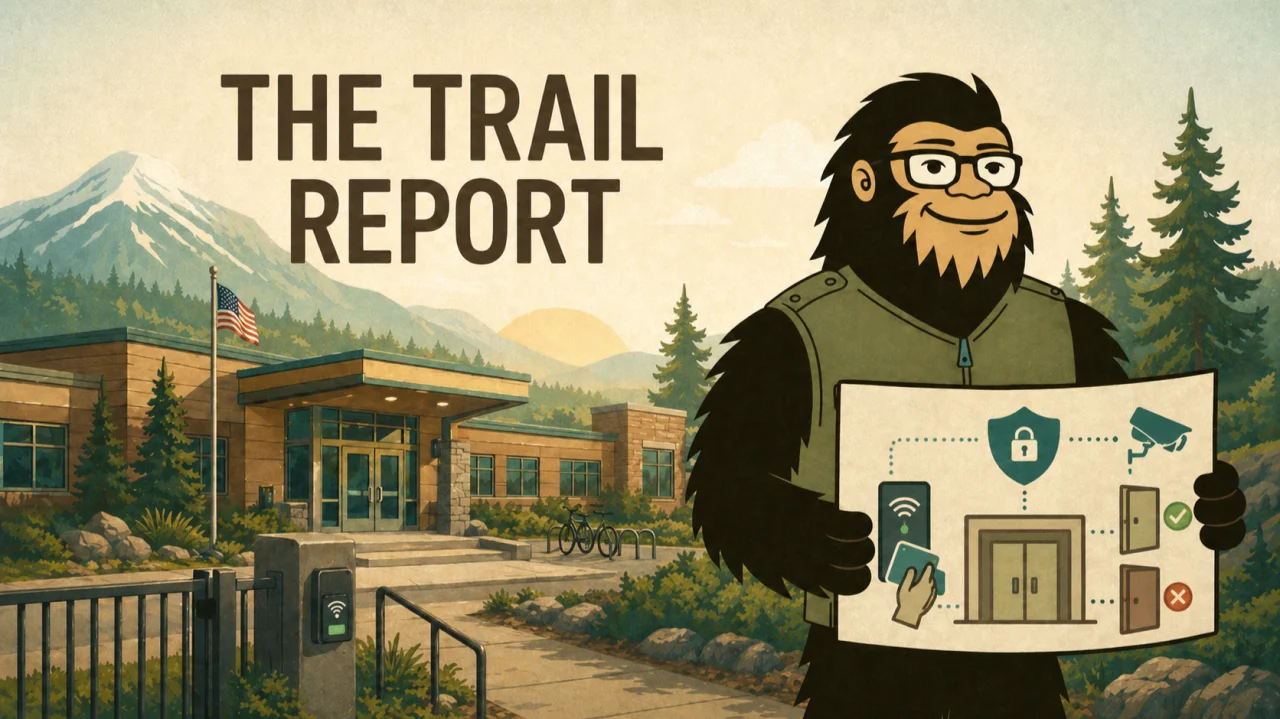
Technology can create real momentum when everything is working together. But when systems become outdated or disconnected, the impact is felt quickly through lost time, limited visibility, added complexity, and increased risk.
In this issue, we are looking at how Pine Cove helped Carbon County School District 2 modernize access control in a challenging building environment. We are also highlighting recent cybersecurity conversations across K-12, where visibility, planning, and everyday awareness continue to be critical for protecting schools.

Bringing Access Control Back Under Control
When systems get outdated, the real cost is not just inconvenience. It is lost time, limited visibility, and added complexity.
At Carbon County School District 2 in Saratoga, Wyoming, Pine Cove helped bring everything back under control.
The project started with aging access control. Doors had to be programmed individually, making even small updates time-consuming and inefficient. On top of that, the building itself added another layer of complexity. With no drop ceilings and limited pathways for running new cable, the project required careful planning and creative installation.
Pine Cove upgraded the environment with new card readers, electric strikes, and door position switches to give the district full visibility into whether doors are open or closed.
Now, everything is managed from one centralized system.
That means:
- No more door-by-door programming
- Real-time awareness of building access
- A system that can scale with future needs
This was not just an access control upgrade. It was a shift from reactive, disconnected security to a controlled and connected environment.
And like many of the projects Pine Cove takes on, it was not just about the technology. It was about finding a way to make the right solution work in a challenging environment.
Check out all the pictures here!
Cybersecurity Readiness Does Not Have to Start With a Massive Budget
Cybersecurity continues to be a major focus across K-12, especially for smaller and rural districts that face many of the same risks as larger school systems, often with fewer internal resources.
At CoSN 2026, K-12 technology leaders shared that cyber readiness does not always begin with a major investment. It starts with practical steps: knowing what systems are in place, understanding where risk exists, improving detection, preparing a response plan, and using free or shared resources where possible. The session focused specifically on how smaller districts can become more cyber-ready on a budget.
That message matters because cybersecurity is no longer just an IT issue. A cyber incident can disrupt instruction, communications, payroll, business operations, and public trust.
For school leaders, the takeaway is clear: cybersecurity planning needs to be visible, practical, and connected to the overall health of the district’s technology environment. The districts that are best prepared are not necessarily the ones with the biggest budgets. They are the ones with a clear plan, strong visibility, and a proactive approach.
🌲Quick Bytes: Must-Read Articles:
The Human Side of Cybersecurity Still Matters-Even with stronger security tools in place, human error remains one of the biggest risks to student privacy. A recent CoSN 2026 session highlighted how everyday mistakes, like sending sensitive information to the wrong audience or misunderstanding vendor responsibilities, can create serious FERPA concerns.
Pine Cove takeaway: Strong security depends on more than tools. Training, communication, and clear processes help prevent small mistakes from becoming major risks.
Cybersecurity Culture Can Start With Students-At DeKalb County School District in Georgia, students are helping lead cybersecurity awareness through a Cyber Champions program. The program trains students to recognize risky behavior, talk about phishing, encourage safer device habits, and promote digital safety across the school community.
Pine Cove takeaway: Cybersecurity works best when it becomes part of everyday behavior. Staff, students, administrators, and leadership all play a role in protecting systems, data, and learning continuity.

Pathfinder 360: Visibility Before Vulnerability
A common thread runs through each story in this issue: visibility matters.
Whether it is access control at a school building, cybersecurity readiness across a district, or staff awareness around student data, leaders cannot protect what they cannot see.
That is where Pathfinder 360 comes in.
Pathfinder 360 is Pine Cove’s framework for aligning IT with organizational goals. It helps turn technology from a barrier into a strategic advantage by giving leadership clear direction, measurable outcomes, and ongoing accountability.
Through assessments, roadmaps, quarterly reviews, insights, reporting, and proactive planning, Pathfinder 360 helps districts move away from reactive decisions and toward a long-term plan. It is built to help leadership understand what is working, where risk exists, what needs attention next, and how technology decisions connect back to the mission.
In today’s K-12 environment, that kind of visibility is not a luxury. It is the foundation for safer, smarter, and more sustainable technology planning.
👉 Take the Pathfinder 360 survey here
Stay Connected Beyond the Trail Report
Our newsletter only scratches the surface of what’s happening every day in the world of IT, security, and education. For the latest updates, quick insights, and resources you won’t find here, follow us on LinkedIn. It’s the best way to stay in the loop with Pine Cove and catch what’s new before the next issue lands in your inbox.
— The Pine Cove Team
